Published on 5 min read By Granja Natura
Animal-assisted therapy: benefits for children's development
Animal-assisted therapy improves emotional regulation, socialisation and cognitive development in children. Discover what the science says and where to practise it near Barcelona.
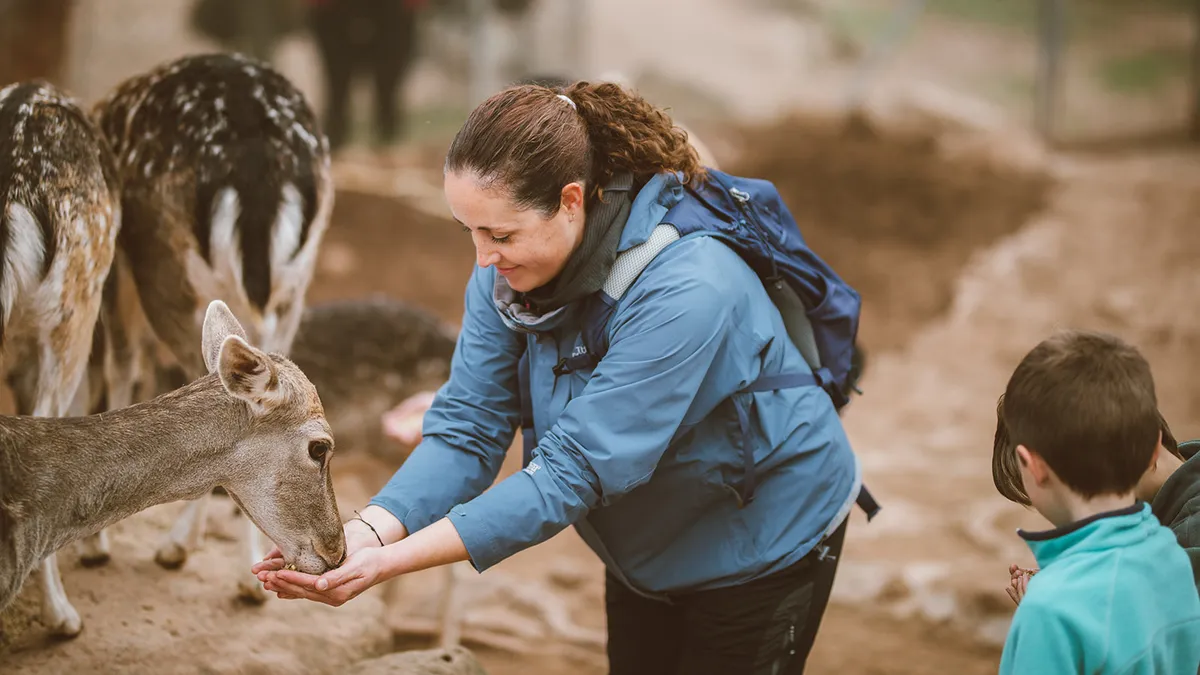
The interaction between children and animals is not just a pleasant moment, it is a therapeutic tool backed by solid scientific evidence. Animal-assisted therapy (AAT) uses the human-animal bond to improve children’s emotional, social, cognitive and physical development. Studies published in journals such as Frontiers in Psychology and PLOS ONE show that regular animal contact produces measurable changes in the developing brain within weeks.
At Granja Natura (Navàs, Barcelona), with over 30 animal species in a privileged natural setting, we offer families a space to experience first-hand the benefits of direct contact with animals.
What exactly is animal-assisted therapy?
Animal-assisted therapy is a formal therapeutic intervention in which a trained animal actively participates in a person’s treatment, supervised by a health or education professional. It is not simply playing with an animal: each session has defined therapeutic goals, a structured plan and an outcome evaluation.
The three main modalities are:
- Animal-assisted therapy (AAT): Clinical interventions with specific therapeutic goals, led by a health professional
- Animal-assisted education (AAE): Educational programmes where the animal facilitates the learning of academic concepts or social skills
- Animal-assisted activities (AAA): Recreational interactions that improve general wellbeing without strict clinical objectives
Benefits for emotional development
Contact with animals activates the oxytocin system in the child’s brain, the same hormone generated in the mother-child bond. Studies show that around 10 minutes of contact with animals helps reduce cortisol levels, the stress hormone, in children with anxiety.
Emotional regulation
Children who participate in AAT programmes learn to identify and manage their emotions through the animal mirror. If a child approaches a goat with sudden movements, the animal moves away. This teaches the child to regulate their emotional state to achieve the connection they seek, a lesson that transfers directly to human relationships.
Reduction of anxiety and stress
Children’s heart rate drops when they stroke a calm-tempered animal. Unhurried contact with rabbits or pygmy goats helps lower heart rate and the feeling of stress, creating a calm that children notice straight away.
Self-esteem and confidence
When a child manages to earn an animal’s trust, getting a rabbit to be held, having a goat eat from their hand, they experience a tangible and immediate success. This experience is particularly valuable for children with low self-esteem or learning difficulties.
Benefits for social and communicative development
Empathy and theory of mind
Caring for an animal forces the child to decentre and think about the needs of another living being. “Is it hungry?”, “Is it cold?”, “Is it scared?”. These questions develop theory of mind, the ability to understand that others have thoughts and feelings different from one’s own. Caring for animals regularly helps children strengthen this capacity and become more empathetic in their everyday lives.
Verbal and non-verbal communication
Animals respond to tone of voice, body language and intention. This motivates children to practise communication naturally, without the pressure of human interaction. For children with speech difficulties or selective mutism, the animal becomes a safe interlocutor that does not judge or correct.
Social skills
Group activities with animals, feeding animals, cleaning enclosures or leading the pony, require cooperation, turn-taking and negotiation. These are real social situations practised in a motivating context.
Benefits for cognitive and physical development
Cognitive stimulation
Learning about species, their habitats, their diet and their behaviour activates natural curiosity and memory. At Granja Natura, children learn to distinguish over 30 different species, retain information about their life cycles and connect concepts of biology, ecology and geography through direct experience.
Motor development
Equine therapy (horse-assisted therapy) is the modality with the strongest evidence for motor development. The horse’s three-dimensional movement transmits around 100 impulses per minute to the rider’s nervous system, improving balance, coordination and muscle tone. But simpler activities too, sweeping an enclosure, carrying a bucket of water, holding a rabbit carefully, develop both fine and gross motor skills.
Attention and concentration
Children with ADHD who take part in AAT programmes often improve their sustained attention. The animal captures the child’s attention naturally, and maintaining the bond requires focus.
Which children benefit most?
AAT has shown significant results for:
| Profile | Key benefits |
|---|---|
| Children with ASD (autism) | Improved eye contact, reduced repetitive behaviours, increased communication |
| ADHD | Improved sustained attention, reduced impulsivity |
| Anxiety and phobias | Cortisol reduction, increased sense of safety |
| Learning difficulties | Improved memory, increased motivation |
| Trauma and grief | Safe emotional processing, trust bonding |
| Physical disability | Improved mobility, coordination and muscle tone (equine therapy) |
It is important to note that AAT does not replace conventional treatments, it complements them. It should always be supervised by qualified professionals.
How to get started with animal-assisted therapy
Recommended steps
- Consult the child’s reference professional (paediatrician, psychologist, therapist) to assess whether AAT is appropriate
- Find accredited centres with trained animals and professional supervision
- Start with short sessions (30-45 minutes) and calm-tempered animals
- Observe the child’s response during the first 2-3 sessions to adjust the programme
- Maintain regularity, benefits accumulate with weekly or fortnightly sessions sustained over time
The experience at Granja Natura
At Granja Natura, in Navàs (just 1 hour from Barcelona), families find a natural space with over 30 animal species, from goats and rabbits to the horses Taca and Jolie, the pony, geese and birds of prey. Guided visits allow children to interact directly with animals in a safe, supervised environment, combining that contact with learning about biodiversity and animal welfare. At the Afternoon Workshop, they can even watch the birds of prey fly up close.
You do not need a diagnosis or medical referral to enjoy the benefits of animal contact. Any child can benefit from a direct experience with nature and animals, and the results, as science shows, go far beyond a fun afternoon.
Book your guided visit at Granja Natura and come discover how contact with animals can make a real difference in your child’s development.
Frequently asked questions
What is animal-assisted therapy and what is it used for?
Animal-assisted therapy (AAT) is a structured therapeutic intervention in which a trained animal actively participates in a patient's treatment process. It is used to improve emotional regulation, reduce anxiety, increase socialisation and stimulate cognitive and motor development. It is always supervised by a qualified health or education professional.
At what age can children start animal-assisted therapy?
Children can benefit from animal-assisted therapy from age 3, always under professional supervision. Between 3 and 6 years, sessions focus on sensory contact and emotional stimulation. From age 6, more structured therapeutic goals can be incorporated. At Granja Natura we offer animal contact activities adapted to all ages.
Which animals are used in animal-assisted therapy?
The most commonly used animals are horses (equine therapy), dogs, rabbits and goats. Each species provides specific benefits: horses improve balance and posture, dogs encourage socialisation, and farm animals like rabbits and goats reduce anxiety due to their calm temperament. At Granja Natura you can meet over 30 species up close during family visits.
Does animal-assisted therapy work for children with autism?
Yes, multiple scientific studies confirm that AAT is particularly beneficial for children with autism spectrum disorder (ASD). It improves eye contact, reduces repetitive behaviours, increases verbal and non-verbal communication, and decreases anxiety episodes. Recent systematic reviews find improvements in communication and anxiety among participants.
Where can I do animal-assisted therapy near Barcelona?
In Catalonia there are several specialised centres offering animal-assisted therapy with accredited professionals. Granja Natura is not a clinical AAT centre, but in Navàs (1 hour from Barcelona) families can enjoy guided visits and workshops with direct contact with over 30 animal species, a great way to bring children closer to the bond with animals. For a structured therapeutic intervention, you should turn to equine therapy centres or professionally supervised canine therapy programmes.
Related articles
-
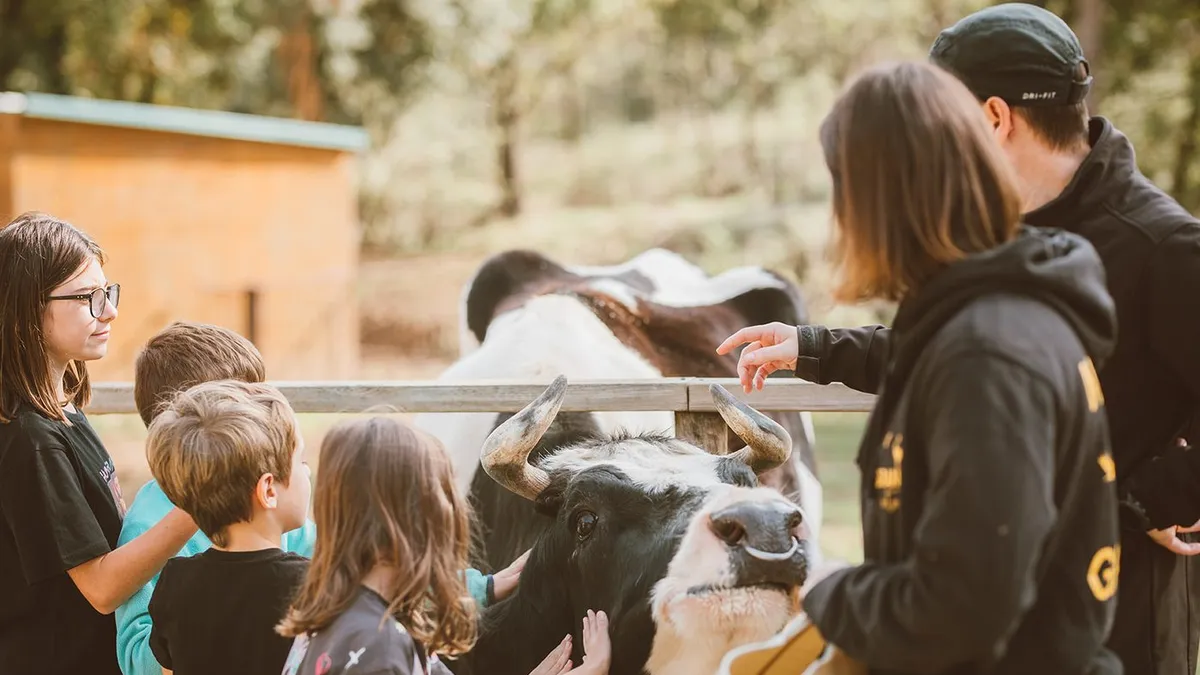
10 benefits of farm school visits for children
Discover why educational farm visits are one of the best activities for children. From animal contact to environmental education, farm schools near Barcelona offer unforgettable experiences.
-
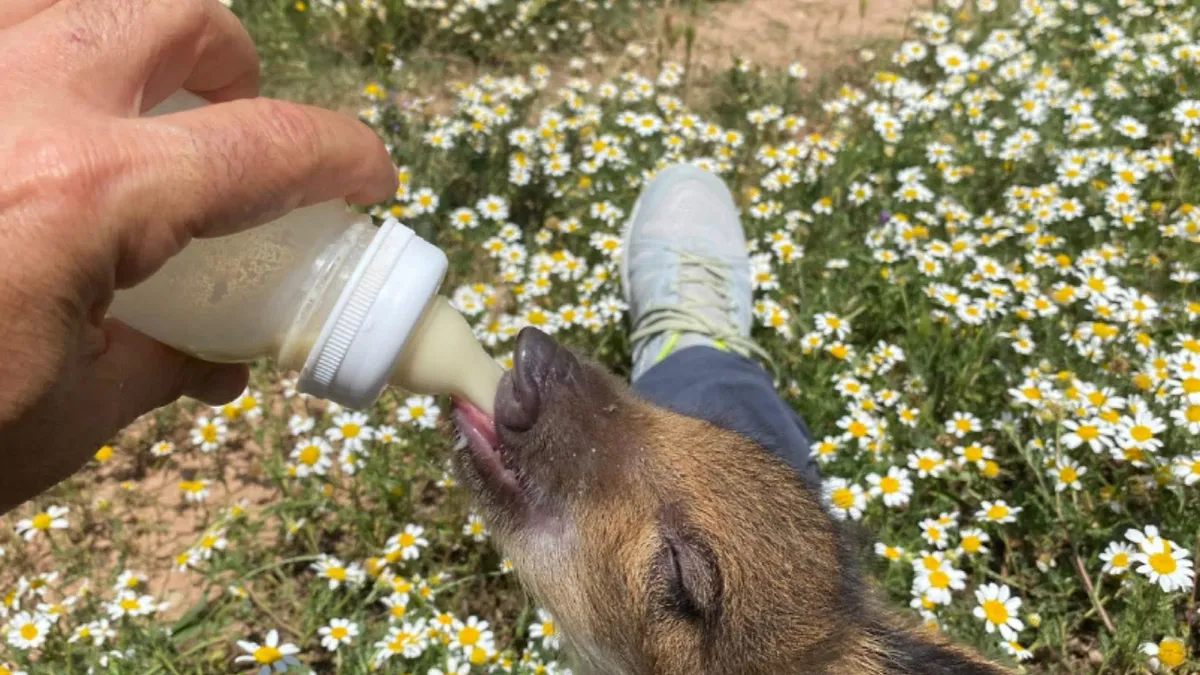
Animal adoption and sponsorship: alternative to buying pets
Buying a pet is not the only option. Discover how animal adoption and sponsorship are responsible alternatives that teach children values and help animals in need.