Published on 5 min read By Granja Natura
Farm animals: educational guide for kids (chickens, goats and more)
Discover the characteristics, fun facts and care of chickens, goats, rabbits and ducks. An educational guide for kids who want to learn about farm animals with real data and hands-on activities.
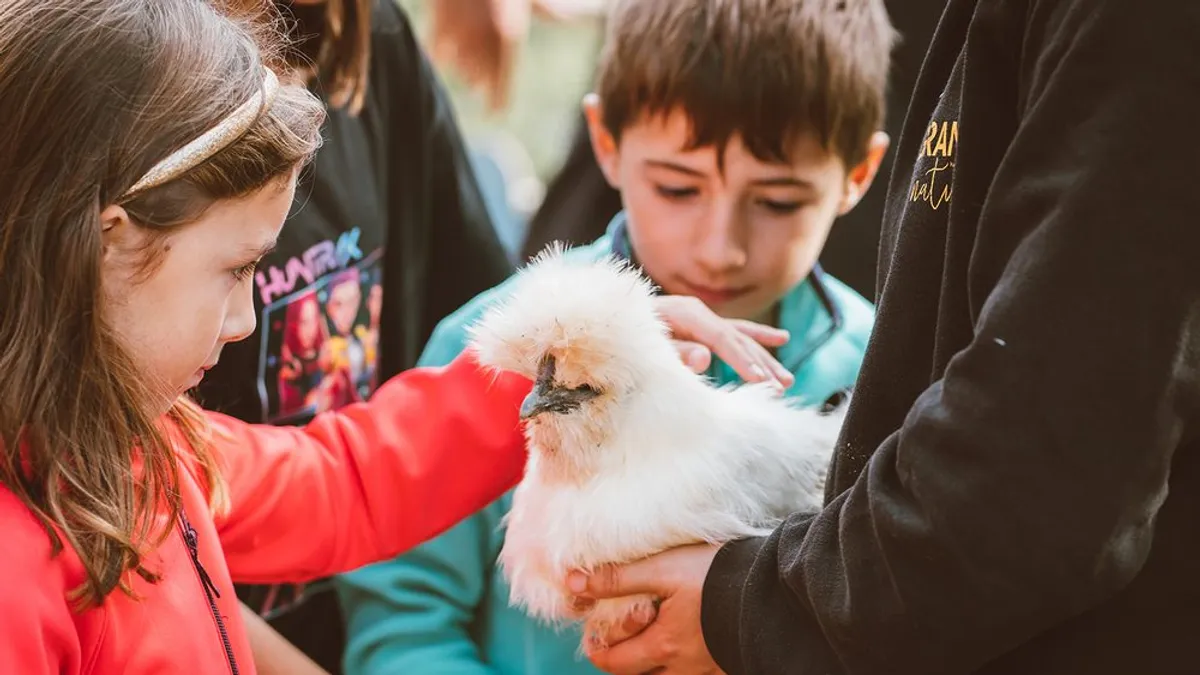
Farm animals are often the first living creatures with which many children form a real bond outside the home. Chickens, goats, rabbits and ducks are not just cute, they are an extraordinary educational tool that sparks scientific curiosity and empathy from a young age. At Granja Natura, the educational nature centre in Navàs, Barcelona, we teach children to understand and respect these animals up close.
This guide covers the characteristics, fun facts and care of 4 of the most common farm animals in children’s education, with real data useful for both families and teachers.
Chickens: far smarter than you think
Chickens (Gallus gallus domesticus) are probably the most underrated farm animal in terms of intelligence. Research into avian cognition shows they can tell apart over 100 individuals and demonstrate basic logical reasoning.
Key facts for kids
- Life expectancy: 5–10 years (farm breeds average around 8 years)
- Adult weight: between 2 and 4.5 kg depending on the breed
- Eggs per year: a laying hen produces between 250 and 300 eggs annually
- Diet: grains, grass, insects and vegetable scraps
- Fun fact: chickens communicate using more than 30 distinct vocalisations, each with a specific meaning
At Granja Natura, children can observe the hens up close and discover the egg cycle during the guided visit, to understand where a food they eat every day comes from. This hands-on experience turns an abstract concept into real knowledge.
Goats: the explorers of the farm
Goats (Capra aegagrus hircus) are one of the oldest domesticated animals in the world, with over 10,000 years of coexistence with humans. They are curious, intelligent and incredibly agile.
Key facts for kids
- Life expectancy: 12–18 years
- Adult weight: between 20 and 140 kg depending on the breed
- Diet: herbivores, grass, leaves, bark and shrubs
- Milk: a dairy goat produces between 2 and 4 litres of milk per day
- Fun fact: goats have horizontal rectangular pupils that give them a field of vision of 340 degrees, almost panoramic
Goats are one of children’s favourite animals at educational farms because they are sociable and approach visitors spontaneously. At Granja Natura, children can hand-feed the goats and observe how they interact with each other within the herd.
Why are goats so intelligent?
Researchers at Queen Mary University of London demonstrated that goats can solve simple mechanical problems (such as opening a latch) and remember the solution up to 10 months later. This cognitive ability makes them a fascinating animal for educational activities.
Rabbits: tenderness and learning
Rabbits (Oryctolagus cuniculus) are one of the most popular animals in educational programmes due to their manageable size and gentle temperament. They are perfect for children’s first interactions with animals.
Key facts for kids
- Life expectancy: 8–12 years (domestic breeds with proper care)
- Adult weight: between 1 and 8 kg depending on the breed
- Diet: strict herbivores, hay, fresh vegetables and grass
- Reproduction: a doe can have between 4 and 12 kits per litter
- Fun fact: rabbit teeth never stop growing, they need to gnaw constantly to wear them down
Rabbits teach children the importance of gentleness and respect when handling animals. They learn that every species has specific needs: rabbits require calm, space to move and a very particular diet.
Ducks: the sociable swimmers
Ducks (Anas platyrhynchos domesticus) bring a different dimension to the educational farm: the relationship between animals and the aquatic environment. Watching them swim, dive and interact with water is a rich sensory experience for children.
Key facts for kids
- Life expectancy: 10–15 years
- Adult weight: between 1 and 4 kg depending on the breed
- Diet: omnivores, grass, insects, worms, grains and aquatic plants
- Eggs per year: between 150 and 300 depending on the breed
- Fun fact: duck feathers are waterproof thanks to a natural wax secreted from a gland at the base of the tail
Ducks also teach children about evolutionary adaptations: why they have webbed feet, why their bill is shaped like a shovel and how their plumage protects them from the cold water. They are a live biology lesson.
What do children learn from farm animals?
Direct contact with chickens, goats, rabbits and ducks goes far beyond entertainment. Educational farms offer learning that no screen can replace:
- Practical biology: anatomy, feeding, reproduction and life cycles
- Responsibility: understanding that animals depend on daily care
- Empathy: recognising that each animal has needs and emotions
- Ecology: understanding the relationships between animals, plants and the environment
- Conscious eating: knowing where milk, eggs and other farm products come from
Research into environmental education shows that direct contact with farm animals strengthens children’s environmental awareness far more than theory-only instruction.
How to make the most of an educational visit
To get the most out of a farm school visit with children, we recommend:
- Prepare questions beforehand: have children bring 3–5 questions about the animals they will see
- Observe calmly: spend time watching how the animals behave, not just touching them
- Take part in activities: get involved in the guides’ proposals and observe the animals up close, because learning is hands-on
- Record the experience: a field diary or drawings after the visit reinforce memory
At Granja Natura, our guided visits are designed to maximise learning: guides adapt their explanations to the children’s age and combine scientific data with real anecdotes about our animals. For schools, our school activities adapt this experience to the science curriculum. With over 30 species, every visit is a different experience.
If you want your children to discover farm animals first-hand, book your visit to Granja Natura and come to Navàs for an unforgettable day in contact with nature.
Frequently asked questions
What farm animals are best for children's education?
Chickens, goats, rabbits and ducks are the most suitable for children's education because they are docile, sociable and allow direct interaction. At Granja Natura in Navàs (Barcelona), children can feed and touch them during guided visits, reinforcing the learning experience.
What do children learn from farm animals?
Children learn basic biology (feeding, reproduction, anatomy), responsibility in caring for living beings, animal empathy and notions of ecology and sustainability. Farm animal activities complement the school science curriculum.
Where can I take my children to meet farm animals near Barcelona?
Granja Natura, located in Navàs (1 hour from Barcelona), offers guided visits with over 30 animal species, including chickens, goats, rabbits, ducks and many more. Visits are adapted by age and include interactive activities.
At what age can children interact with farm animals?
Children can interact with farm animals from a very young age, always accompanied by an adult. Granja Natura visits are for all ages, and between 3 and 6 years old is an ideal stage to begin understanding basic concepts about animal feeding and care.
Are farm animals dangerous for children?
Domesticated farm animals accustomed to human contact are not dangerous. At educational centres like Granja Natura, all animals are socialised and interactions are supervised by specialist guides who ensure safety at all times.
Related articles
-
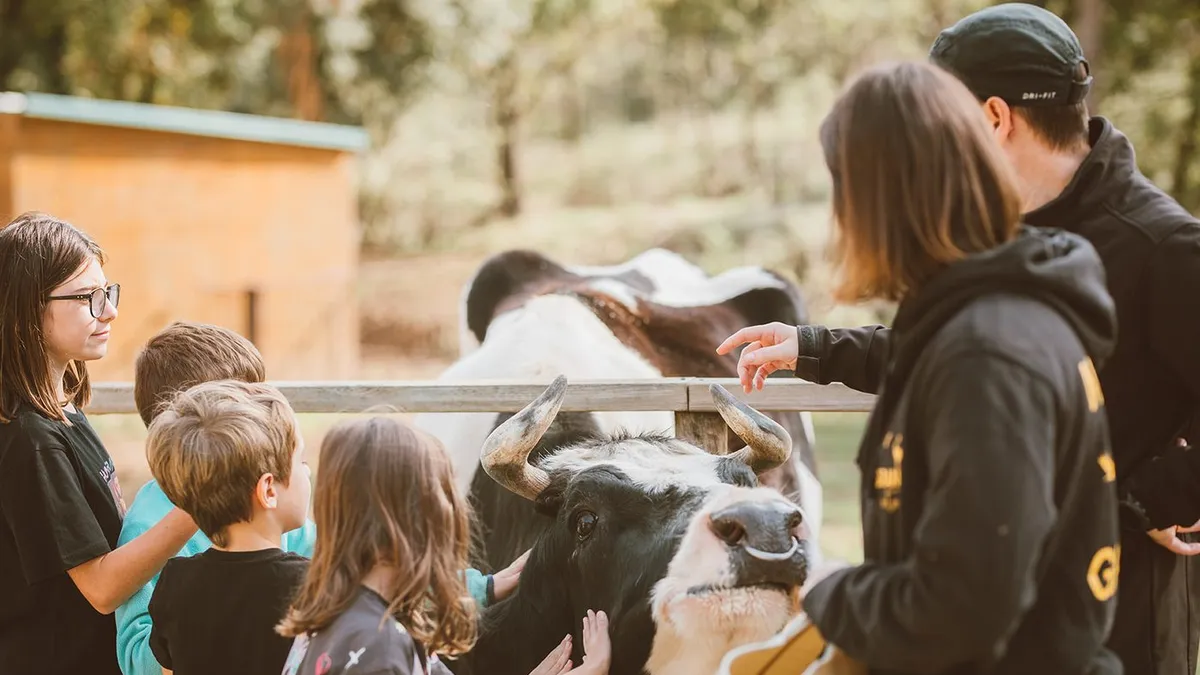
10 benefits of farm school visits for children
Discover why educational farm visits are one of the best activities for children. From animal contact to environmental education, farm schools near Barcelona offer unforgettable experiences.
-
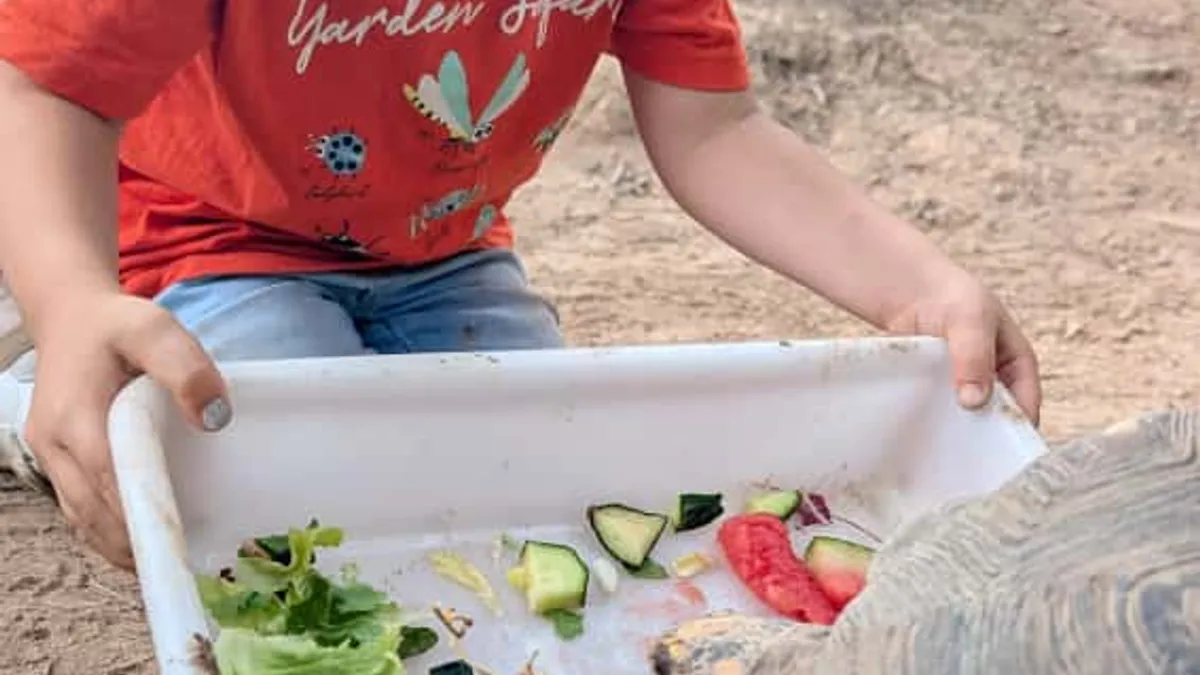
Buying tortoises: they live 50 years and grow huge, no one warns you
Before buying a tortoise, did you know it can live over 100 years and weigh up to 40 kg? Discover the reality of tortoises as pets and CITES regulations in Spain.