Published on 8 min read By Granja Natura
Buying tortoises: they live 50 years and grow huge, no one warns you
Before buying a tortoise, did you know it can live over 100 years and weigh up to 40 kg? Discover the reality of tortoises as pets and CITES regulations in Spain.
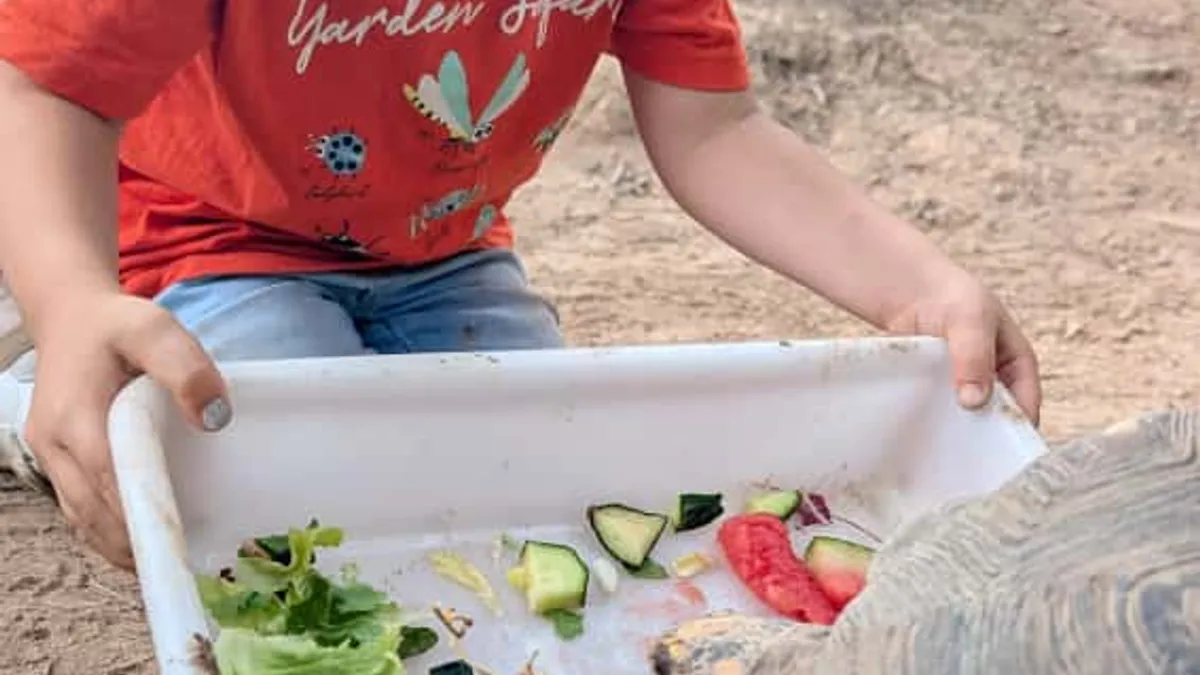
Land tortoises are one of the most popular and, at the same time, most misunderstood companion animals. Every year, thousands of families in Catalonia and across Spain buy tiny tortoises, often small enough to fit in the palm of a hand, without knowing that the animal can live over 100 years, weigh 40 kilograms and need an entire garden to live with dignity.
At Granja Natura (Navas, Barcelona province) we keep several species of land tortoise that visitors can see up close. When families see an African giant tortoise up close and learn that as an adult it exceeds 80 cm of shell and 40 kg, the reaction is always the same: “Is that what the tortoise we bought at the shop would become?”.
Yes. Exactly that.
The reality pet shops don’t tell you
When you walk into a pet shop and see those small, adorable tortoises in a terrarium, the sales assistant rarely gives you the full picture:
Actual adult size by species
| Species | Hatchling size | Adult size | Adult weight | Life expectancy |
|---|---|---|---|---|
| Mediterranean tortoise (Testudo hermanni) | 3-4 cm | 18-25 cm | 2-4 kg | 50-100 years |
| Spur-thighed tortoise (Testudo graeca) | 3-4 cm | 20-30 cm | 3-5 kg | 60-100 years |
| Sulcata tortoise (Centrochelys sulcata) | 4-5 cm | 60-85 cm | 30-45 kg | 70-100 years |
| Red-footed tortoise (Chelonoidis carbonarius) | 4-5 cm | 30-40 cm | 5-12 kg | 40-60 years |
| Leopard tortoise (Stigmochelys pardalis) | 4-5 cm | 40-60 cm | 15-25 kg | 50-80 years |
| Russian tortoise (Testudo horsfieldii) | 3-4 cm | 15-22 cm | 1-2 kg | 40-60 years |
The sulcata tortoise, one of the most widely sold species in Spain owing to its availability and price, is the largest continental tortoise in the world (the third-largest overall, after the Galapagos and Aldabra giants). That 5 cm animal that fits in your palm will need tens of square metres of space within a few years.
Real needs of a land tortoise
Tortoises are not “easy” or “low-maintenance” animals, despite how they are often presented. They have very specific requirements:
Space
- Outdoor living is essential for most species: they need direct sunlight to synthesise vitamin D3
- Minimum 10 m2 enclosure for a large tortoise, with a fence buried into the ground (they dig!)
- Sun and shade areas: they must be able to thermoregulate
- Shelter or hide: protection from rain, wind and extreme temperatures
- Natural substrate: soil, grass, sand, never tiles or concrete
Temperature and lighting
- Daytime temperature: 25-32 °C (warm zone), 20-25 °C (cool zone)
- Night-time temperature: not below 15 °C for tropical species
- UVB lighting: If kept indoors, they need specialist UVB lamps (12-14 hours daily) to metabolise calcium
- Hibernation: Some species (Mediterranean, spur-thighed, Russian) need to hibernate in winter (5-10 °C for 3-4 months). Without hibernation, their health deteriorates
Diet
The diet of a land tortoise is far more complex than it might seem:
- Base (80 %): Wild herbs (dandelion, plantain, clover), dark leafy greens (endive, escarole, rocket)
- Supplement (15 %): Edible flowers (hibiscus, rose), occasional fruit (once a week maximum)
- Additive (5 %): Powdered calcium (cuttlebone), reptile vitamins
- FORBIDDEN: Iceberg lettuce (no nutritional value), excess tomato (acidic), bread, pasta, dairy, animal protein
In our enclosures, visitors can see how we feed the tortoises with species-specific diets. Most families are surprised by the variety and specificity of their food.
Veterinary care
Tortoises need a specialist exotic-animal vet, which is not always easy to find or affordable:
- Annual check-up: EUR 50-100
- Faecal analysis (parasites): EUR 30-60
- X-ray (egg retention, stones): EUR 80-150
- Surgery (shell fracture, egg retention): EUR 300-1,000
CITES regulations: what you need to know
The vast majority of land tortoises are protected under the Convention on International Trade in Endangered Species (CITES). This has direct implications for buyers:
Appendix I (maximum protection)
Species in danger of extinction. International commercial trade is prohibited:
- Radiated tortoise (Astrochelys radiata)
- Egyptian tortoise (Testudo kleinmanni)
- Galapagos giant tortoise (Chelonoidis nigra)
Appendix II (regulated trade)
Species requiring a CITES certificate for any transaction:
- Mediterranean tortoise (Testudo hermanni), native to Catalonia!
- Spur-thighed tortoise (Testudo graeca), native to the Iberian Peninsula!
- Sulcata tortoise (Centrochelys sulcata)
- Leopard tortoise (Stigmochelys pardalis)
- Russian tortoise (Testudo horsfieldii)
What you need legally
- CITES certificate or legal transfer document (the seller must provide it)
- Registration of the animal on the exotic-pet census
- Microchip (mandatory for tortoises above certain sizes)
- Purchase invoice proving legal origin
Buying a tortoise without CITES documentation is a criminal offence that can carry substantial financial penalties and, in serious cases, criminal liability.
The problem of abandoned tortoises
What happens when a family buys a 5 cm sulcata tortoise thinking it is an “easy” pet and, 10 years later, has a 25 kg animal in the garden that destroys plants, digs holes and will not stop growing?
Common scenarios
- Release into the wild: The most common option and the worst. Exotic tortoises released into the countryside compete with native species, transmit diseases and disrupt ecosystems. In Catalonia, the red-eared slider (Trachemys scripta) has virtually displaced the native European pond turtle from local waterways
- Online ads: Many try to give away or sell the animal online, often without the necessary CITES documentation (illegal)
- Dropping them at shelters: Exotic-animal shelters are overwhelmed
- Taking them to a wildlife recovery centre: the CRARC or the Catalan government wildlife recovery centres (CRFS) are the legal route for a reptile that can no longer be kept
Behind every abandoned tortoise there is an impulse purchase that no one paired with the information needed to make it.
Native tortoises: a threatened treasure
The Iberian Peninsula is home to two native land-tortoise species, both under threat. In Catalonia, the one that occurs naturally is the Mediterranean tortoise:
Mediterranean tortoise (Testudo hermanni)
- Status: Endangered in Catalonia
- Habitat: Scrubland, Mediterranean forest, abandoned farmland
- Population: Small, fragmented populations in Catalonia, concentrated in the Albera Massif, with reintroduced groups in the Garraf and Montsant areas
- Threats: Forest fires, road kills, illegal collection, habitat loss
Spur-thighed tortoise (Testudo graeca)
- Status: Vulnerable
- Habitat: Arid areas of south-east Spain
- Threats: Similar to the Mediterranean tortoise, with the added risk of hybridisation with released exotic species
The buying and selling of native tortoises captured from the wild is completely prohibited and is a serious wildlife offence.
Before you buy: come and see them for real
The best way to understand what keeping a tortoise involves is to see an adult-sized one in person. At Granja Natura we have several species of land tortoise that visitors can observe up close, including the African giant tortoise and the Mediterranean tortoise. Seeing the real size of an adult tortoise is eye-opening.
During our guided visits, the guides explain:
- How long tortoises live
- How big they get
- What they eat and what care they need
- Why they should not be bought on impulse
The tortoise test
Before buying a tortoise, ask yourself these questions:
- Who will be looking after the tortoise in 50 years? (It will probably outlive you)
- Do you have a garden? (Most species need ample outdoor space)
- Can you afford the vet bills? (Exotic-animal vets are not cheap)
- Are you willing to adapt your garden? (Buried fences, shelter, sun areas)
- Do you know where to find an exotic-animal vet? (Not all vets treat reptiles)
- Do you have the CITES documentation? (Without papers, it is illegal)
If the answer to any of these is “no”, a tortoise is not the right pet for you. But you can still enjoy them by booking a visit.
What to do if you already have a tortoise and can no longer care for it
If you already own a tortoise and circumstances have changed, never release it into the wild. Legal and responsible options include:
- Contact a wildlife recovery centre: the CRARC or the Catalan government wildlife recovery centres (CRFS) can advise you
- Specialist organisations: FAADA, AER (Spanish Reptile Association)
- Responsible rehoming: If the tortoise has CITES documentation, you can look for a responsible adopter
- Contact SEPRONA (Spain’s environmental police): If you lack documentation, regularise the situation before taking any action
Come and meet the tortoises at Granja Natura
At our centre in Navas, just one hour from Barcelona, you can see land tortoises up close, understand their real needs and make an informed decision if you are thinking about keeping one. Our guided visits include detailed explanations about the biology, care and legal regulations surrounding these fascinating creatures.
Because a tortoise is not a gift for a child: it is a commitment for an entire lifetime, and quite probably, for your children’s lifetimes too.
Book your visit to Granja Natura and discover the world of land tortoises.
Frequently asked questions
How long does a land tortoise live?
It depends on the species: the Mediterranean tortoise (Testudo hermanni) lives 50-100 years, the sulcata tortoise (Centrochelys sulcata) can exceed 70 years, and the Aldabra giant tortoise reaches 150 years. All far surpass the lifespan of a dog or cat.
How big does a pet-shop tortoise get?
Sulcata tortoises, one of the most commonly sold species, grow from 5 cm at birth to over 80 cm and 40 kg in 15-20 years. Mediterranean tortoises reach 20-25 cm and 2-4 kg. Many people buy them tiny without realising how large they will become.
Do I need a permit to keep a land tortoise in Spain?
Yes. Most tortoise species are listed under CITES (Appendix I or II). You need a CITES certificate, which the seller must provide. Some exotic species are also banned in Catalonia because they are potentially invasive. Always check current regulations before buying.
What does a land tortoise need to live well?
A spacious outdoor enclosure (minimum 10 m2 for a large tortoise), areas of sun and shade, appropriate substrate, a shelter, artificial UVB lighting if kept indoors, temperatures of 20-30 °C, a varied diet of leafy greens and herbs, and visits to a reptile-specialist vet.
Can I release my tortoise if I no longer want it?
No, it is illegal and causes severe ecological damage. Released exotic tortoises compete with native species, transmit diseases and disrupt ecosystems. If you can no longer care for it, contact the CRARC, the Catalan government wildlife recovery centres (CRFS) or SEPRONA, Spain's environmental police, for a legal solution.
Related articles
-
Responsible pet ownership: animals are not toys
Over 280,000 animals are abandoned in Spain every year. Learn what responsible pet ownership truly means, legal obligations, and how to educate children about animal respect.
-
Never release exotic pets: ecological and legal consequences
Releasing a turtle, parrot or exotic fish into a river may seem kind, but it is illegal and causes severe ecological damage. Learn the real impact and the responsible alternatives.
-
Animal adoption and sponsorship: alternative to buying pets
Buying a pet is not the only option. Discover how animal adoption and sponsorship are responsible alternatives that teach children values and help animals in need.