
Published on 6 min read By Granja Natura
Invasive species in Catalonia: animals threatening biodiversity
From the red-eared slider to the Asian hornet, invasive species cause millions of euros in damage across Catalonia. Learn about the main species, their impact and how we can stop them.
Invasive species are one of the main threats to biodiversity in Catalonia and worldwide. According to the Intergovernmental Platform on Biodiversity and Ecosystem Services (IPBES), invasive species are the second leading cause of species extinction globally, behind only habitat destruction.
In Catalonia, the problem is particularly acute: our geographical position, Mediterranean climate and the commercial ports of Barcelona and Tarragona make us a gateway for species from around the globe. At Granja Natura (Navas, Barcelona province), we devote part of our educational activities to explaining the difference between native and invasive species, and why it is so important never to release exotic pets into the wild.
What is an invasive species?
An invasive alien species (IAS) is an organism that:
- Has been introduced outside its natural range (by human action)
- Has become established and reproduces in the new territory
- Causes ecological, economic or health-related damage
Not all exotic species are invasive. Many do not survive or cause no significant harm. But those that do can trigger catastrophic and often irreversible impacts.
The most problematic invasive species in Catalonia
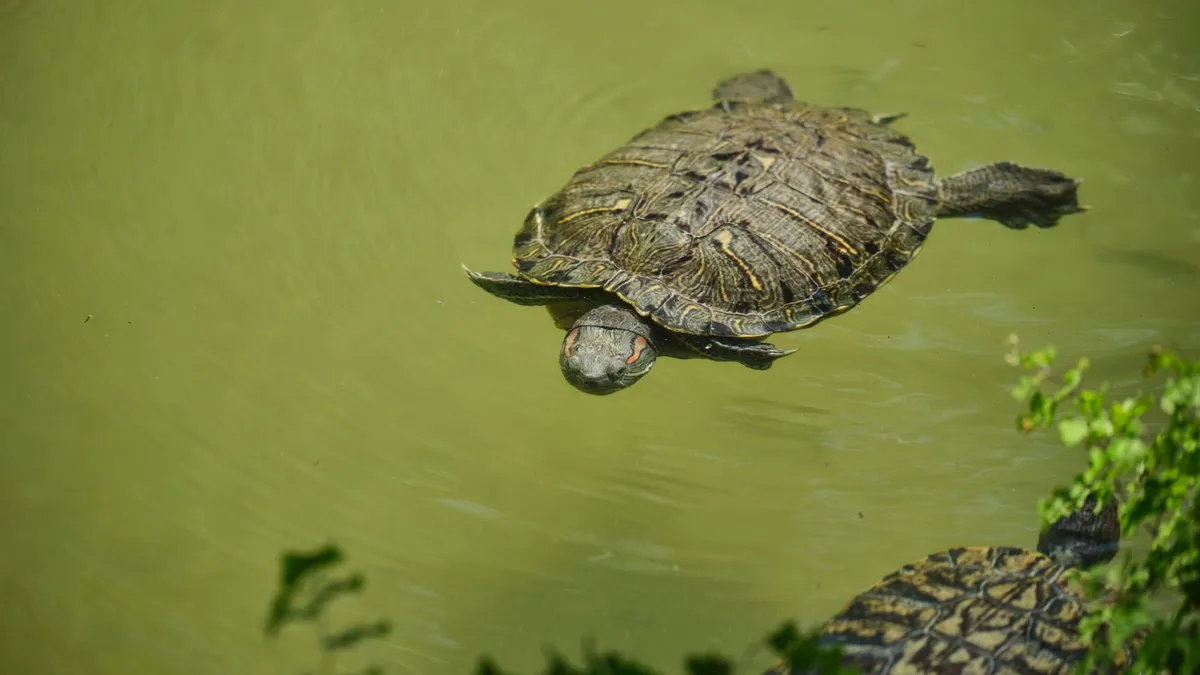
Red-eared slider (Trachemys scripta)
The queen of the invaders in Catalonia.
- Origin: South-eastern United States
- How it arrived: Sold en masse as a pet in the 1980s and 1990s, then released into lakes and ponds
- Impact: Has displaced the native European pond turtle (Emys orbicularis) from most of its habitats. Competes for basking spots, food and nesting sites
- Adult size: 20-30 cm shell (much larger than the baby turtles sold in shops)
- Reproduction: Each female can lay 10-30 eggs per season
- Current distribution: Present in virtually all bodies of water in Catalonia
- Regulation: Import banned in the EU since 1997. Listed on the IAS catalogue
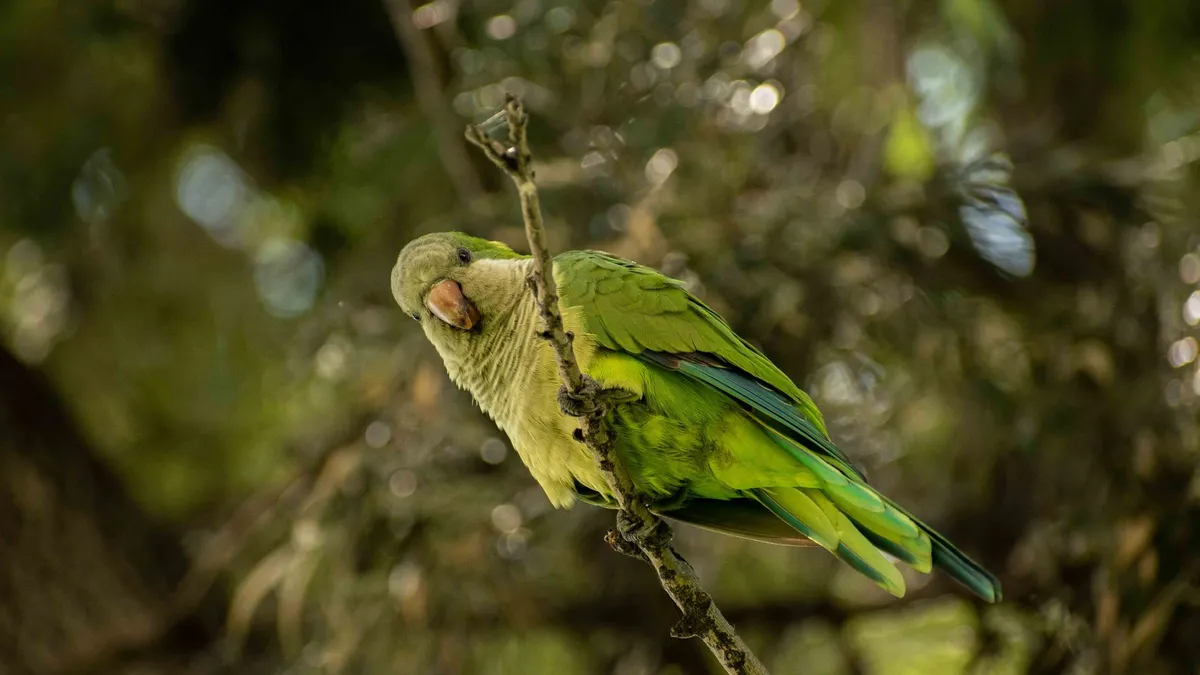
Monk parakeet (Myiopsitta monachus)
The urban invader par excellence.
- Origin: South America (Argentina, Uruguay, Brazil)
- How it arrived: Escaped and released from aviaries and homes
- Impact: Competes with native birds for nesting space. Its massive communal nests (up to 200 kg!) damage trees and structures. Can affect fruit crops
- Barcelona population: Over 6,000 individuals (2024), growing steadily
- Distribution: Barcelona, Tarragona, Girona and coastal towns
- Fun fact: The only parrot that builds nests (most nest in cavities)
Ring-necked parakeet (Psittacula krameri)
- Origin: Africa and southern Asia
- How it arrived: Escaped from captivity
- Impact: Competes with native birds for nesting holes (especially the hoopoe, woodpecker and kestrel)
- Distribution: Barcelona metropolitan area, expanding
- Size: Larger than the monk parakeet (40 cm), with a distinctive neck ring on males
American mink (Neovison vison)
- Origin: North America
- How it arrived: Escaped from fur farms in the 1980s-1990s
- Impact: Preys directly on the European mink (Mustela lutreola), one of Europe’s most endangered species. Also affects waterbirds, amphibians and crayfish
- Distribution: Pyrenean and pre-Pyrenean rivers, expanding
- Control: Trapping and sterilisation programmes, with limited success
American crayfish (Procambarus clarkii)
- Origin: South-eastern United States and Mexico
- How it arrived: Imported for aquaculture in the 1970s
- Impact: Carries the fungus Aphanomyces astaci, lethal to the native white-clawed crayfish. Digs burrows that damage dykes and embankments. Alters aquatic vegetation
- Result: The native crayfish (Austropotamobius pallipes) has vanished from 90 % of Catalan rivers
- Distribution: Present in most lowland water bodies
Wels catfish (Silurus glanis)
The giant of the Ebro.
- Origin: Eastern Europe and Central Asia
- How it arrived: Introduced into the Ebro river in the 1970s for sport fishing
- Impact: An apex predator that has transformed the entire river food chain. Preys on eels, barbels, carp and even waterbirds
- Size: Can exceed 2.5 metres and 100 kg, the largest freshwater fish in Europe
- Distribution: Ebro river and main tributaries, Mequinensa and Riba-roja reservoirs
- Fun fact: Wels catfish have been observed “beaching” themselves on river banks to catch pigeons (unique behaviour)
Asian hornet (Vespa velutina)
The threat to honeybees.
- Origin: South-east Asia
- How it arrived: Probably via goods imports (first recorded in France in 2004, in Catalonia in 2015)
- Impact: Preys heavily on honeybees, threatening pollination and beekeeping. A single hornet can kill 25-50 bees per day
- Cost: The Catalan beekeeping sector loses millions of euros annually
- Distribution: Spread across all of Catalonia, especially the north
- Control: Nest detection and destruction (complex and costly)
Raccoon (Procyon lotor)
- Origin: North America
- How it arrived: Escaped and released pets
- Impact: Opportunistic omnivores that affect birds (eggs and chicks), amphibians and crops. Carry parasites potentially dangerous to humans (Baylisascaris procyonis)
- Distribution: Still localised (Valles, Maresme), in expansion phase
- Risk: If not controlled soon, they could become established as in Germany, where they are already considered a pest
The economic impact
Invasive species do not only affect biodiversity, they carry an enormous economic cost:
- Spain: Over EUR 1 billion per year in damage and management
- EU: Over EUR 12 billion per year
- Global: Over USD 423 billion per year (IPBES data, 2023)
In Catalonia, costs include:
- Monk parakeet control in Barcelona: millions of euros
- Asian hornet management: hundreds of thousands of euros in nest destruction
- Beekeeping losses from the Asian hornet
- American mink control programmes
- Restoration of degraded habitats
Why are they so hard to eliminate?
Once an invasive species becomes established, eradication is virtually impossible:
- Rapid reproduction: Without natural predators, populations grow exponentially
- Adaptability: Species that succeed in establishing are, by definition, highly adaptable
- Wide distribution: By the time they are detected, they often occupy extensive territory
- High cost: Control requires sustained effort over years
- Hydra effect: Removing one species can benefit another invader
For every euro invested in prevention, between 10 and 100 euros are saved in control and damage repair. Prevention is always the best strategy.
What can we do?
As citizens
- Never release exotic pets into the wild (more information)
- Do not buy exotic pets on impulse, research thoroughly first
- Report sightings of invasive species to the Rural Agents or citizen-science platforms
- Do not transport water, soil or plants from one location to another without precaution
- Clean fishing and boating equipment between different bodies of water
- Educate yourself and others, take children to nature centres where the difference between native and non-native species is explained
As a society
- Strengthen border controls and species-trade regulation
- Invest in early detection and rapid response
- Fund control and eradication programmes
- Educate from school age about biodiversity and invasive species
- Apply the precautionary principle with new species imports
Discover native species at Granja Natura
The best way to value our biodiversity is to know it. At Granja Natura (Navas, Barcelona province), during our guided visits, we explain to visitors:
- The difference between native and non-native species
- Why invasive species are a problem
- How to identify the most common invaders
- What to do if you spot an invasive species
- How our everyday actions affect biodiversity
With over 30 animal species, Granja Natura is the perfect place to learn to value every species, in its rightful place.
Book your visit to Granja Natura and learn about Catalonia’s biodiversity.
Frequently asked questions
What are the most dangerous invasive species in Catalonia?
The most impactful are: the red-eared slider (Trachemys scripta), the monk parakeet (Myiopsitta monachus), the American mink (Neovison vison), the American crayfish (Procambarus clarkii), the Asian hornet (Vespa velutina), the wels catfish (Silurus glanis) and the raccoon (Procyon lotor). Each causes significant ecological damage.
How do invasive species reach Catalonia?
The main pathways are: the pet trade (released or escaped animals), ships' ballast water, goods transport, deliberate release for fishing or hunting, escapes from farms (fur, fish), and natural migration facilitated by climate change.
What can I do if I spot an invasive species?
You can report it to the Catalan government's Department of Climate Action, to the Rural Agents (93 561 70 00), or log the sighting on the Natusfera or iNaturalist platforms. Do not try to capture or kill the animal yourself, it can be dangerous and counterproductive.
Why is it so difficult to eliminate invasive species once they are established?
Because they reproduce rapidly, have no natural predators in the host ecosystem, adapt well to the local climate and fill ecological niches left vacant. Eradicating an established species requires years of effort and millions of euros, and often only management (not elimination) is achievable.
Does climate change make the invasive-species problem worse?
Yes, significantly. Rising temperatures allow tropical and subtropical species to survive at latitudes where they previously could not. Climate change also weakens native species (water stress, reproductive changes), making them more vulnerable to competition from invaders.
Related articles
-
Never release exotic pets: ecological and legal consequences
Releasing a turtle, parrot or exotic fish into a river may seem kind, but it is illegal and causes severe ecological damage. Learn the real impact and the responsible alternatives.
-
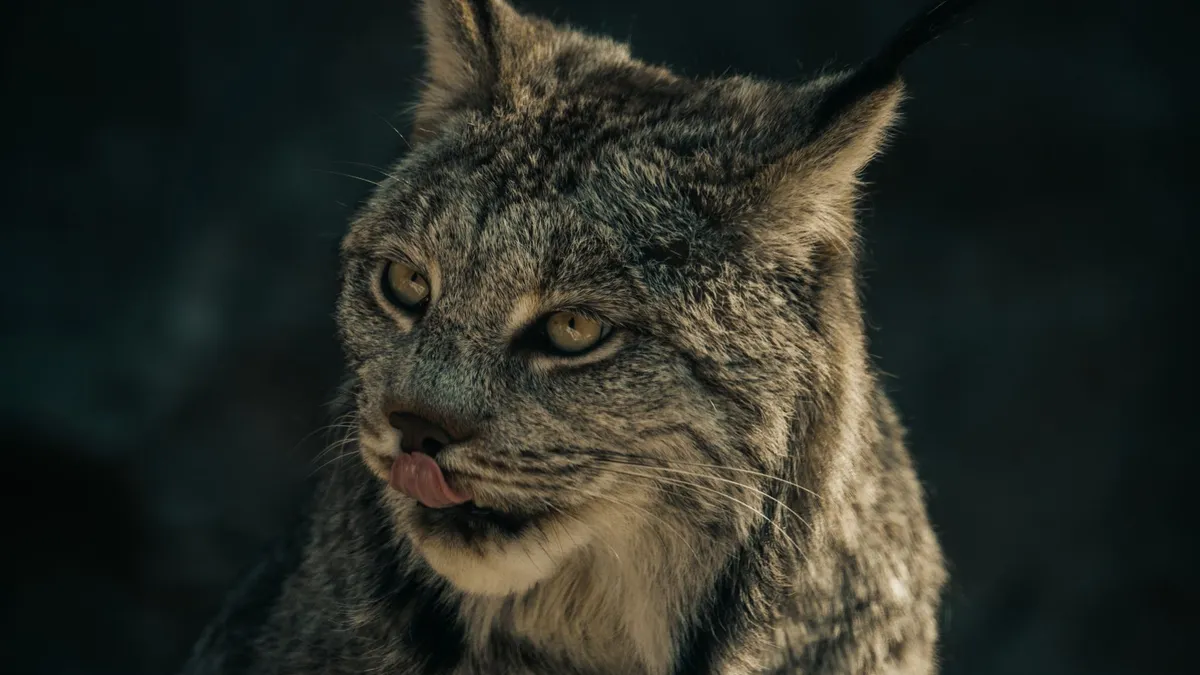
Native animals in danger of extinction in Catalonia and Spain
From the Iberian lynx to the Pyrenean bearded vulture, discover native species in danger of extinction in Catalonia and Spain: threats, conservation programmes and how you can help.