Published on 8 min read By Granja Natura
Found a baby deer or boar piglet? Don't touch it: guide
Finding a baby roe deer or wild boar piglet in the forest does not mean it has been abandoned. Learn when it is a real emergency and when the best thing to do is leave it alone.
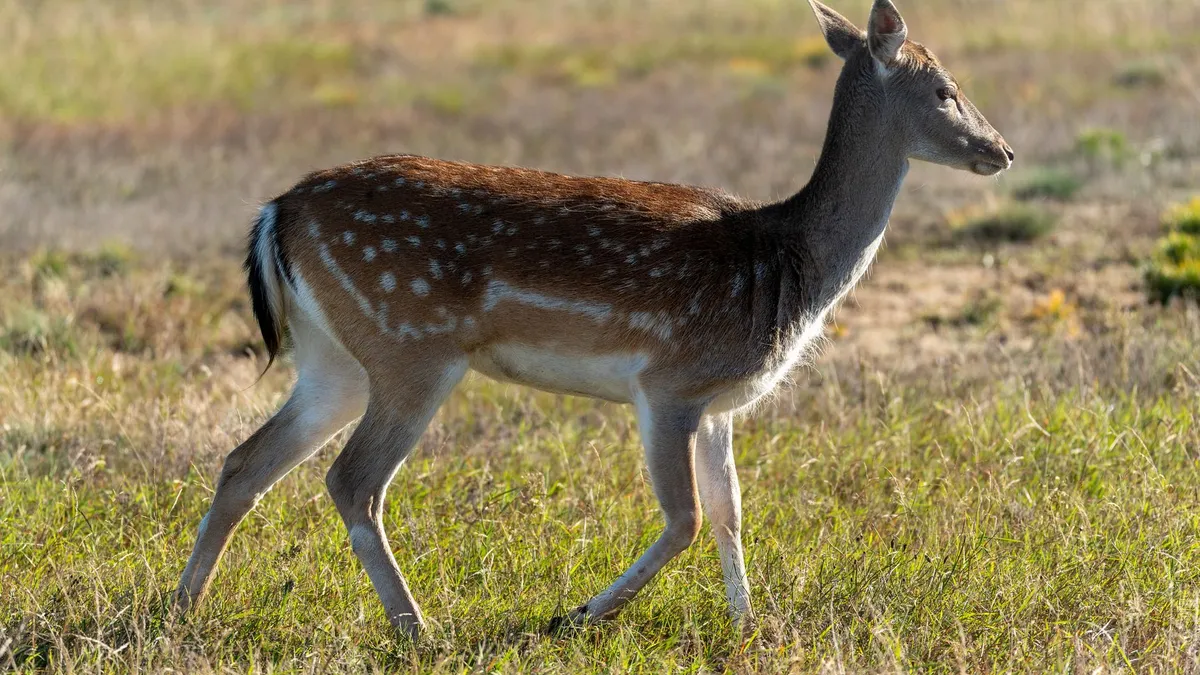
Every spring and summer, Catalonia’s Rural Agents and Wildlife Recovery Centres (CRFS) receive dozens of roe deer fawns, wild boar piglets and other young animals that well-meaning people have “rescued” from the forest. The problem? The vast majority of these youngsters did not need rescuing at all. They were exactly where they were supposed to be, waiting for their mother to return.
At Granja Natura (Navas, Barcelona province), one of the most frequent questions we receive from visiting families is: “We found a baby deer alone in the woods, what should we do?”. The answer, in the vast majority of cases, is clear: do nothing, walk away and leave it in peace.
The great misunderstanding: “alone” does not mean “abandoned”
The behaviour of wild mammal young is very different from what we might expect. When we see a baby animal on its own, our instinct tells us it is in danger. But in the wild, solitude is often a survival strategy.
How roe deer raise their young
The female roe deer (Capreolus capreolus) has a very specific parenting strategy:
- Birth (May-June): The doe has 1-2 fawns in a secluded spot
- Natural camouflage: Fawns are born with a spotted coat (brown with white spots) that makes them virtually invisible among vegetation
- Immobility: Fawns remain completely still for hours, even if a predator passes nearby
- Scent-free: Newborn fawns have almost no scent, which protects them from predators
- Mother’s visits: The doe returns every 4-8 hours to nurse them, usually at dawn and dusk
- Deliberate separation: The mother moves away on purpose so that her scent does not attract predators to the fawn
This temporary separation is completely normal and essential for the fawn’s survival. The mother has NOT abandoned her young, she is doing exactly what nature has taught her to do.
How wild boar raise their young
The wild boar (Sus scrofa) case is different:
- Litter (March-May): The sow has 4-8 piglets
- Family group: Unlike roe deer, wild boar piglets always move with the mother and the rest of the family group
- Striped coat: Piglets are born with a chestnut coat bearing pale longitudinal stripes for camouflage
- Protective mother: The sow is extremely protective and can be aggressive if she perceives a threat
- Gradual independence: Piglets begin feeding independently at around 3-4 months
If you find wild boar piglets, the mother is almost certainly nearby. Move away immediately.
When it IS a real emergency
There are situations where a young animal genuinely needs help. Learn to recognise them:
Signs that a youngster needs help
- Dead mother visible: If you find the mother’s body nearby (road kill, hunting)
- Injured young: Visible blood, broken limb, open wounds
- Flies and larvae: Flies hovering around or larvae on the body (indicates the animal has been without care for a long time)
- Severe dehydration: If the skin on the nape, gently pinched, does not spring back quickly
- Hypothermia: Cold ears and extremities, trembling
- Continuous crying: A fawn bleating non-stop for hours may truly be in trouble
- Danger zone: The youngster is in the middle of a road or a construction site
Signs the youngster is FINE
- Calm and motionless: The fawn is hidden, quiet, eyes open and bright
- Clean coat: No flies, larvae or excessive dirt
- Silent: In quiet mode (normal camouflage behaviour)
- Normal temperature: The body feels warm if you touch it accidentally
- Safe location: In a meadow, under a bush or in tall grass
Step-by-step protocol: what to do if you find a youngster
Step 1: Stop and observe
- Keep a minimum distance of 20-30 metres
- Watch for a few minutes: what does the animal look like, what is it doing, where is it
- Do not approach, do not touch it, do not photograph it at close range
Step 2: Assess the situation
Ask yourself:
- Are there signs of injury or illness? -> Emergency
- Is the mother’s body nearby? -> Emergency
- Is the youngster in a danger zone (road)? -> Emergency
- Is the youngster calm, hidden, uninjured? -> NOT an emergency
Step 3a: If it is NOT an emergency
- Move away at least 50 metres from the spot
- Mentally mark the location (photo of the surroundings from a distance)
- Return after 6-8 hours to check whether the youngster is still there
- If it has gone: the mother came to collect it. All is well
- If it is still there (24+ hours, same position): call the Rural Agents
Step 3b: If it IS an emergency
- Call immediately 112 or the Rural Agents (93 561 70 00)
- Do not touch the animal unless strictly necessary
- If you must move it off a road: use gloves or a cloth, handle with great care
- Do not give it food or milk, cow’s milk is toxic to many species
- Wait for instructions from the professionals
Species-by-species guide
Roe deer fawns
- Season: May - July
- Appearance: Brown coat with white spots, roughly the size of a small cat
- Normal behaviour: Motionless in the grass, alone, silent
- Most common mistake: Picking it up because “it’s alone and abandoned”
- What to do: Walk away and do not touch it. If it is in the exact same spot after 24 hours, call the Rural Agents
Wild boar piglets
- Season: March - June (peak), but can occur year-round
- Appearance: Chestnut coat with pale longitudinal stripes
- Normal behaviour: In a group, following the mother
- Most common mistake: Approaching to photograph or touch them
- What to do: Move away quickly and quietly. The mother can be very aggressive
Bird chicks
- Season: April - August
- Appearance: Incomplete plumage, limited flying ability
- Normal behaviour: On the ground or on low branches, parents nearby
- Most common mistake: Picking them up to “put them back in the nest”
- What to do: If it is a feathered fledgling, leave it where it is. If it is a featherless nestling, you can place it on a high branch. If a cat is nearby, remove the cat
Baby rabbits
- Season: February - September
- Appearance: Very small, short-furred
- Normal behaviour: In the burrow; the mother visits 1-2 times a day to nurse them
- Most common mistake: Accidentally digging up the burrow (garden, field)
- What to do: If you uncover a burrow, cover it gently and mark the spot. Do not handle the young
Baby hedgehogs
- Season: April - October
- Appearance: Small, with soft white spines
- Normal behaviour: In the nest, with the mother
- Most common mistake: Picking them up when found outside the nest
- What to do: If a baby hedgehog is wandering alone during the day and weighs under 300 g, it probably does need help. Call the CRFS
The “human scent” myth
One of the most widespread myths is that if you touch a baby animal, the mother will reject it because of the human scent. This is not entirely true:
- Most mammals do not reject their young simply because they have been touched
- What does happen is that human scent can alert predators to the youngster’s presence
- The real problem is not the scent, but that by picking up the baby, you permanently separate it from its mother
- In the case of birds, the sense of smell is very poorly developed: the mother will not detect human scent
Nevertheless, the golden rule remains the same: do not touch the young.
Why taking a youngster home is illegal and harmful
Under Catalan and Spanish law, keeping wild animals at home is a serious administrative (or criminal, depending on the species) offence:
Legal reasons
- Wild animals are public natural heritage
- Protected species (such as the roe deer) require special permits
- Fines can run into tens of thousands of euros
Biological reasons
- Diet: Cow’s milk, goat’s milk and commercial substitutes are unsuitable for most species
- Imprinting: A youngster raised by humans may lose its fear of people, condemning it to being unable to survive in the wild
- Socialisation: Young animals need to learn species-specific behaviours (fleeing, foraging, interacting with peers)
- Disease: Without a specialist vet, illnesses go undetected
Wildlife recovery centres explain that every spring they receive calls from people who have been raising a fawn for weeks and then do not know what to do. Often the animal can no longer go back to the forest because it has lost its fear of humans, and that well-meaning act ends up condemning it.
How to teach children about wild animals
Finding a youngster in the forest is a fantastic educational opportunity if handled well:
- Explain to the children why the baby is alone (survival strategy)
- Teach them that helping does not always mean intervening
- Encourage observation from a distance
- Visit Granja Natura to learn about Catalan wildlife with specialist guides
- Use the experience to talk about respect for nature
Learn to respect wildlife at Granja Natura
At Granja Natura (Navas, Barcelona province), our guides explain to visitors how the wildlife of the Mediterranean forest behaves, which species live near us and how to act correctly if we encounter animals in the countryside. With over 30 animal species, our guided visits are the best way to learn to respect the natural world.
Because sometimes, the best way to help is to do nothing at all.
Book your visit to Granja Natura and learn to live alongside wild animals.
Frequently asked questions
Why are roe deer fawns alone in the forest?
Female roe deer leave their fawns hidden in tall grass while they go off to feed. This is completely normal behaviour that can last several hours. The fawn stays motionless and virtually scentless to avoid predators. The mother returns regularly to nurse it, usually at dusk or during the night.
If I touch a roe deer fawn, will the mother reject it?
Human scent may cause the mother to take longer to return or make her more nervous, but she rarely rejects the fawn outright. The real problem is that by picking up the fawn and taking it away, you separate it from its mother permanently. The best course of action is not to touch it at all.
How can I tell an abandoned fawn from one simply waiting for its mother?
A healthy fawn is calm, bright-eyed and has clean fur. A fawn in trouble shows: dehydration (skin pinched on the neck does not spring back), hypothermia (cold ears and legs), flies or larvae on the body, continuous bleating for hours, or the mother's body found nearby.
What should I do if I find wild boar piglets alone?
Wild boar piglets move in a group with their mother. If you find piglets alone, move away quickly: the mother is most likely very nearby and can be aggressive if she perceives a threat. If you are certain the mother has died (road strike, hunting), call the Rural Agents. Never try to pick up piglets, the mother may attack.
Can I raise a roe deer fawn or wild boar piglet at home?
No, it is illegal and harmful to the animal. Wild animals need specialist care and socialisation with their own species to survive in the wild. A roe deer raised by humans will not learn to flee from predators or to feed itself. Keeping wild animals at home is also a serious legal offence in Spain.
Related articles
-
What to do if you find an injured animal: protocol in Catalonia
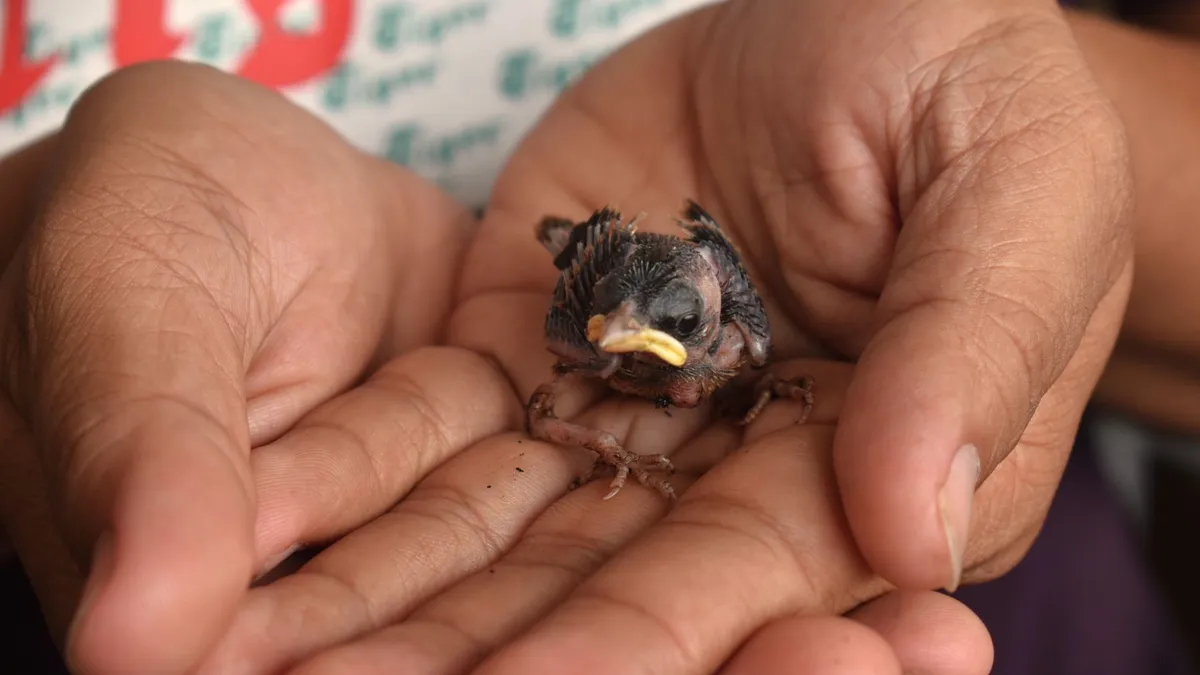
Found an injured animal in the countryside or in town? Learn the correct protocol in Catalonia: what to do, who to call, and how to act without endangering the animal or yourself.
-
Mediterranean forest animals: complete guide to Catalonia's wildlife
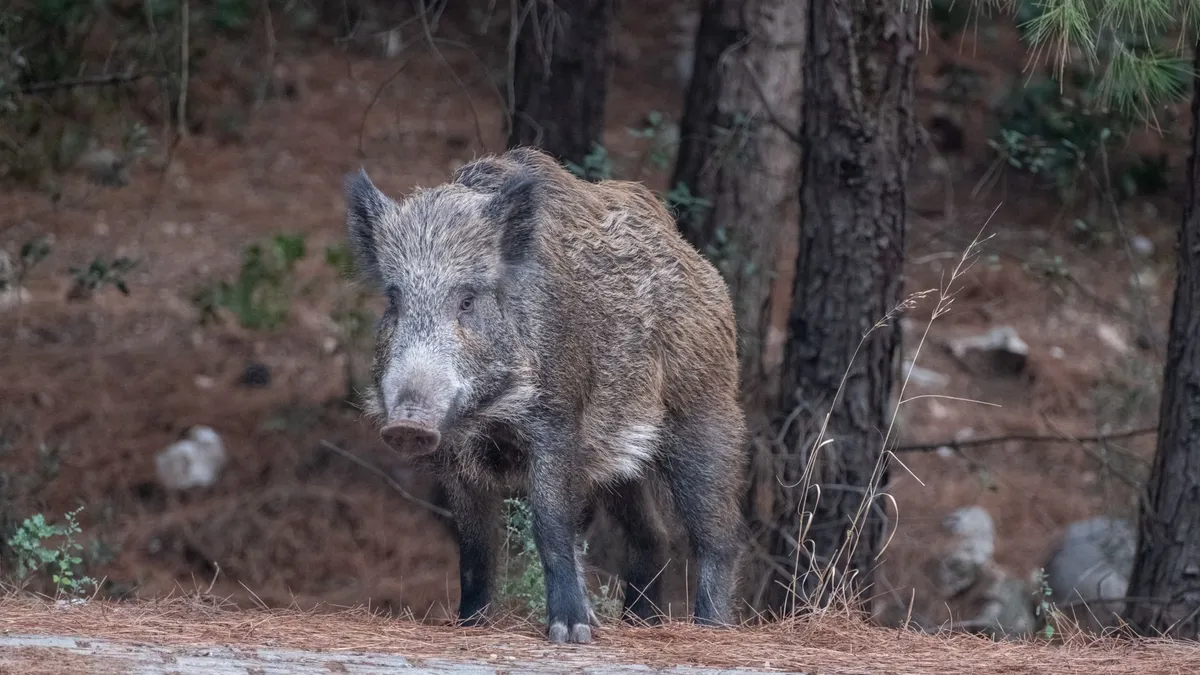
Discover the animals living in Catalonia's Mediterranean forests: wild boars, roe deer, foxes, raptors and more. A complete guide with habitats, behaviour and fascinating facts.